

Rising 14,410 feet above sea level, Mount Rainier is an active volcano surrounded by 25 named glaciers and over 236,000 acres of protected wilderness. Visitors can hike more than 275 miles of trails through ancient forests and subalpine meadows to view massive ice fields like the Nisqually Glacier.
Find Guided ToursMount Rainier is an active volcano situated in west-central Washington, approximately 65 miles southeast of Seattle. Rising to an elevation of 14,410 feet with a topographic prominence of 13,211 feet, it stands as the tallest peak in the Cascade Range. Congress established the surrounding 236,382 acres as the fifth United States national park on March 2, 1899.
The mountain is geologically young. Successive lava flows of andesite and dacite built the volcano over the last 500,000 years. Today, it features the largest single-mountain glacier system in the contiguous United States. Twenty-five named glaciers cover 100 square miles of the peak, feeding five major river systems across the Pacific Northwest. Dramatic elevation changes within the park span from 1,600 feet to over 14,400 feet, supporting diverse ecosystems.
Humans first inhabited this region about 9,000 years ago. The area holds immense cultural significance as the ancestral homeland of the Coast Salish, Cowlitz, Muckleshoot, Nisqually, Puyallup, Squaxin Island, and Yakama people. Local Native American tribes traditionally called the mountain Takhoma.
European explorers first documented the peak in 1792 when Captain George Vancouver named it after his friend, British Admiral Peter Rainier. Hazard Stevens and P.B. Van Trump completed the first recorded summit in 1870. Twenty years later, in 1890, Fay Fuller became the first documented woman to reach the top. Currently, the entire park operates as a designated National Historic Landmark District, drawing around two million visitors annually.

Discover the full history and cultural significance on our About page.
Drive to Sunrise, the highest point accessible by car at an elevation of 6,400 feet. Walk the Emmons Vista Trail for close-up views of the Emmons Glacier. This vantage point allows you to see massive sheets of ice and the rugged volcanic terrain of the tallest Cascade Range peak.
Visit the subalpine meadows of Paradise during July and August. Hikers walking the paved trails will see colorful displays of purple lupine, red paintbrush, and white avalanche lilies. These summer months provide warm, dry weather and long daylight hours to view flora against the 14,410-foot mountain.
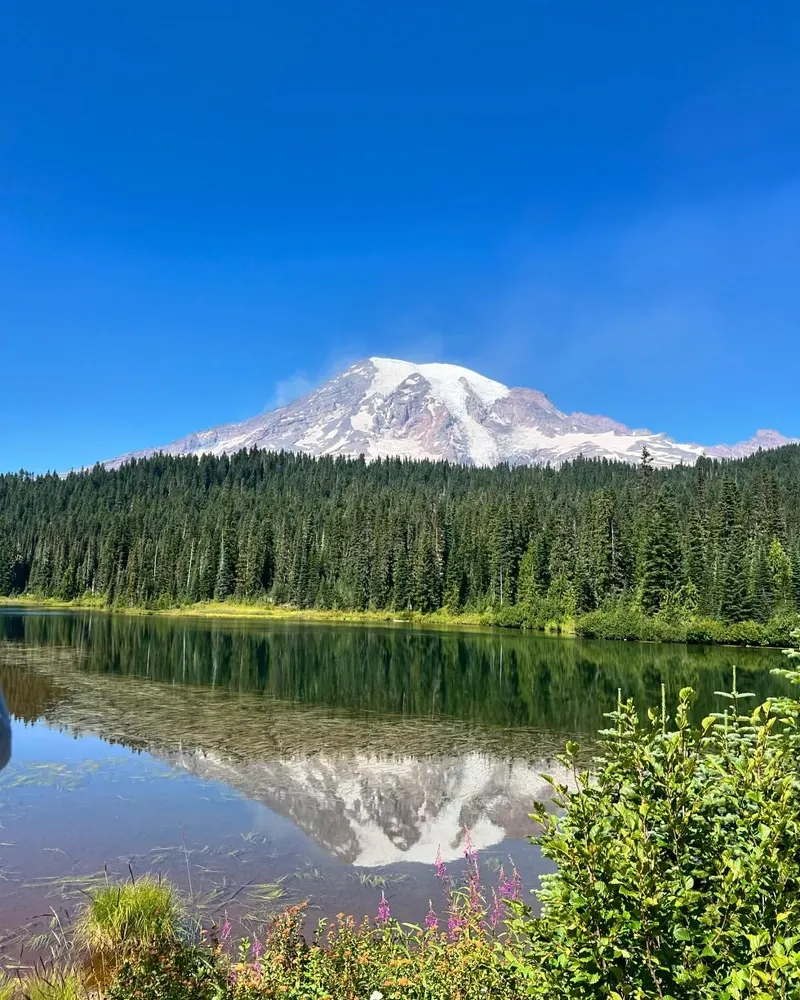
Walk along the shores of Reflection Lakes just south of Paradise. On calm, clear days, these pristine alpine waters create a perfect, mirror-like double image of the snow-capped volcano. This location provides an iconic photography opportunity within the 236,382-acre protected area.
Examine the rustic, late 19th-century log and stone structures at Longmire. You can view the National Park Inn and hike the flat Trail of the Shadows loop to see mineral springs. This area highlights the early history of a landscape that became the fifth United States national park in 1899.
Hand-picked tours with free cancellation and verified reviews
 Free Cancellation
  Free Cancellation
  Free Cancellation 10h 30min
  Free Cancellation
  Free Cancellation
  Free Cancellation
  Free Cancellation
  Free Cancellation 8h
 July and August are the optimal months to visit Mount Rainier, providing warm weather, fully open visitor facilities, and reliable road access. Visitors should expect large crowds during this peak period.
Severe winter weather and heavy snowfall persist through much of spring. Most park roads and facilities remain closed, and tire chains are legally required for all vehicles until May 1.
July and August offer warm, dry weather and long daylight hours. Subalpine wildflowers bloom across the meadows, and high-elevation routes like the road to Sunrise become fully accessible.
Early autumn provides sweeping mountain views and brilliant foliage near Tipsoo Lake. However, high-elevation roads close by mid-October, and severe winter weather with nightly road closures begins in November.
Winter brings heavy snowfall and challenging driving conditions. The road from Longmire to Paradise closes nightly, most visitor facilities shut down entirely, and all vehicles must carry tire chains.
Mount Rainier National Park is open 24 hours a day, 365 days a year, though road and facility access is highly seasonal. The road from Longmire to Paradise closes nightly from November 1 through the winter, reopening each morning pending snow removal. The road to Sunrise typically opens from July 1 through early September. Starting in late September, this road closes nightly at the White River Campground junction before shutting down entirely for the winter in mid-October. The Longmire Wilderness Information Center operates daily from 7:30 am to 5:00 pm between May 22 and October 12.
| Category | Price |
|---|---|
| Vehicle entry (one-to-seven day pass) | $30.00 |
| Annual park pass | $55.00 |
| Motorcycle entry (valid 7 days, up to 2 motorcycles and 4 passengers) | $25.00 |
| Individual walk-up, bicycle, or foot entry (ages 16 and older) | $15.00 |
| Children under 16 | Free |
| Commercial sedan (1-6 seats) | $30.00 plus $15.00 per client |
| Commercial van (7-15 seats) | $75.00 |
| Commercial motor coach (26+ seats) | $200.00 |
All payments at entrances and campgrounds are cashless. The park will not require timed entry reservations in 2026. Free entrance days in 2026 include February 16, May 25, June 14, July 3–5, August 25, September 17, October 27, and November 11.
For complete schedules and ticket prices, visit our Hours & Fees page.
Mount Rainier is located approximately 65 miles southeast of Seattle, with no direct public transportation available into the park. Visitors must rely on a personal vehicle, private shuttle, or a commercial guided tour to reach the entrances.
Driving from Seattle-Tacoma International Airport covers 85 miles and takes roughly two hours. Travelers should head south on I-5 before taking SR 706 east directly to the Nisqually Entrance. This specific entrance sits in the southwest corner of the park. It provides reliable, year-round access to the popular Longmire and Paradise areas.
Visitors without a personal vehicle can book a private shuttle service, such as Talking Rocks, well in advance. These shuttles can pick up hikers directly from the airport or Enumclaw. The 45-mile trip from Enumclaw takes just over an hour. This service is particularly useful for car-free travelers and those planning point-to-point backpacking itineraries.
Several commercial operators run day trips directly from Seattle hotels. The 90-mile drive typically takes two and a half hours. These guided tours operate year-round and conveniently include the park admission fee in the ticket price. However, they follow rigid schedules that limit personal exploration time within the park boundaries.
For detailed transport options and routes, visit our Directions page.
Summer traffic creates long delays at the Nisqually and White River Entrances. Plan your arrival before 10:00 AM or after 2:30 PM for easier parking. The park will not require timed entry reservations in 2026. Visiting mid-week instead of on weekends also minimizes congestion.
Mount Rainier has transitioned completely to cashless payments for all entrance stations and campgrounds. The standard single-vehicle pass costs $30.00. Visitors who prefer to use cash must purchase their pass in advance at designated local businesses along the route, such as the Ashford General Store.
All vehicles entering the park between November 1 and May 1 are legally required to carry approved tire chains. This rule applies regardless of current weather conditions or if you drive a four-wheel-drive SUV. Steep roads become icy, and the speed limit is strictly 35 mph.
Thieves frequently target parked vehicles at trailheads to steal bags and electronics. Never leave personal items visible inside your car while hiking. Store all valuables securely in your trunk before you arrive at your destination to reduce the risk of a break-in.
During the snowy winter months, there is no food service available at the Paradise area. Visitors heading up the mountain should purchase refreshments at the Longmire General Store beforehand. Alternatively, pack your own supplies to sustain yourself throughout the day.
Federal rules strictly prohibit operating unmanned aerial vehicles anywhere within the 236,382-acre park boundaries. Additionally, pets are banned from all 275 miles of hiking trails. Dogs are only permitted in parking lots, picnic areas, and campgrounds while on a leash no longer than six feet.
Passengers ride a historic steam train through the forested foothills. Special events include the adults-only Cider Tasting Train, allowing guests to sample local Washington ciders while enjoying river views.
Washington State's only passenger gondola transports visitors directly to the summit of Crystal Mountain. Guests can sit in chairs at the top to view Mount Rainier and the Cascade Range.
Stretching south to the Columbia River, this vast forest provides extensive wilderness areas. It serves as an excellent alternative for hiking and camping across rugged volcanic landscapes without heavy crowds.
Read what travelers share about their experience visiting Mount Rainier — from practical tips to personal highlights.


No, Mount Rainier National Park will not require timed entry reservations in 2026. The park manages peak-season congestion through parking management strategies instead.
A single-vehicle pass valid for one to seven days costs $30.00. All park entrances and campgrounds are completely cashless. If you want to pay with cash, you must pre-purchase your pass at local businesses along the route, such as the Ashford General Store.
July and August provide the most reliable weather and road access. During these two months, the subalpine wildflowers are blooming and visitor facilities are fully open. Expect heavy crowds and plan to arrive before 10:00 AM or after 2:30 PM to find parking.
The park's Nisqually Entrance is 85 miles from the airport, taking about two hours by car on I-5 and SR 706. There is no direct public transportation. Visitors without a car can book a private shuttle for $1.11 per mile plus $29.00 per hour, or join a commercial guided tour ranging from $114.00 to $184.00 per adult.
Between November 1 and May 1, all vehicles entering the park must legally carry approved tire chains. This rule applies to every vehicle, including four-wheel-drive SUVs, regardless of current weather conditions. Drivers must also adhere to the 35 mph park speed limit at all times.
The park features several accessible options, including the flat 0.1-mile Kautz Creek boardwalk. Paved trails in the lower meadows of Paradise are accessible with assistance, though some sections are steep. Wheelchair-accessible rooms and dining are also available at both the National Park Inn and Paradise Inn.
A wilderness permit is required year-round for all overnight stays in the backcountry. You can obtain these permits in advance through Recreation.gov. Day hikers do not need a permit, but they must follow park rules and keep pets off all trails.
The park technically remains open 24 hours a day, 365 days a year, but access is heavily restricted by seasonal weather. From November through April, most roads and visitor centers close due to heavy snowfall. The road from Longmire to Paradise closes nightly starting November 1, while the road to Sunrise is entirely closed from mid-October until July.
Browse verified tours with free cancellation and instant confirmation.
Find Tours